
Week 4: It's all about the tuning
- Tim Allison

- Mar 4, 2019
- 7 min read
Updated: Apr 2, 2019
Whether I'm in a 'tuning session', tuning my percussion in Ableton, or in the studio ensuring the band is in tune, this week seems to have a recurring theme. Stay with me and we'll also investigate some basic location sound recording skills, and take a look at the Zoom F8: a portable field recorder.
The week began with a group 'tuning' session, where we each presented our projects so far for some valuable feedback and potential direction moving forwards. I received some great feedback, with positive comments on the adequate coverage of the frequency spectrum, and my choice of instruments and sounds; particularly on the Snare Dubbers instrument (mentioned last week) with its associated processing. One particular student commented that he heard one of the bass notes out of time, another that it was "a little hollow or incomplete". Finally, a comment from Adrian Carroll stressed that the mids weren't standing out as much as they could be, which I hoped would be fixed with the inclusion of the tongue drum samples.

Unfortunately, due to external commitments again this week, I feel as though I let the team down by not being able to attend our second attempt at recording the tongue drum. Once again, communication (and consequently understanding, compassion, and problem-solving) was essential, and our team discussed various solutions. Ultimately, the most favourable outcome was to go ahead with the session. Fortunately our objective nature in dealing with such a hiccup made it comfortable for everyone, and after extensive external communication I learned of their process. Firstly, Robbie and Quinn decided against using a stereo-mic'ing technique, instead opting to position a Rode NT2-A microphone about 20cm from the sound source. They also decided against having hand- and mallet-struck sample options. In favour of this more simple process, it enabled the team to effectively manage its time, and ensure a clean sampled sound without complication for use in DÜÜB's project.

Quinn was kind enough to take the project file home that night and cut the recorded audio into its associated eight notes of samples, which he arranged into a drum rack in Ableton and uploaded for use. However, holding a desire for my repertoire of audio-related skills to be expansive, I decided to solidify my knowledge of the sampling process by doing my own investigation; this seven-part series by SOS I found particularly thorough. My learnings have been compiled here, in the first of a basic skill-up blog series, SHARPEN UP.
Upon creating a new MIDI track in Ableton with this "Tongue Drum Sample Pack", I got to work adding in our very own samples to my DÜÜB contribution (which I am just now realising needs a name - let's call mine "Spacial Awareness"). After excitedly MIDI-mapping the notes and some parameters to my USB Keyboard and playing around, I quickly recognised some unfavourable qualities of the tongue drum that I wanted to improve upon. I inspected each of the recorded samples and noticed that two of them contained a noise (assumedly a movement of the drummer's clothing), and a few had quite harsh resonant peaks. With the help of some heavy use of EQ, particularly notch filtering problematic frequencies, I was able to mitigate the various issues.

Unsurprisingly though, with such heavy EQ, the samples needed something to brighten them up and fill them out by utilising some creative post-production tools (learned through aforementioned Lynda tutorials and by informed experimentation). Initially a saturator assisted in providing some warmth and additional harmonics to the sound. Fortunately I was going for a 'dreamy', 'atmospheric' effect anyway, so I turned to a chorus effect to provide a dreamy stereo sound to the mono source. Finally, with some compression and final EQ, our tongue drum samples were able to sit consistently and well placed in the mix, providing an ethereal element to Spacial Awareness. To avoid audible clutter as well as monotony, I included the sampled instrument to fill out the second verse where it had previously seemed 'empty', and then throughout the final breakdown bringing another element to the ultimate crescendo of the song.


Taking feedback from the tuning session into consideration, I then began tweaking the position of the bass notes (in milliseconds) to correct that issue. A lesson from Pete Trimbacher also answered a question I had regarding the tuning of drums. Musically, it made sense to me, but I was at a loss as to how in a DAW. Fortunately this simple solution involves inserting a 'Tuner' to the instruments effect chain, and transposing the sound to the correct pitch. Fortunately, this technique is also used in the pitching of samples and therefore found in greater detail in my aforementioned sampling blog.
Further mixing of the levels of each individual instrument (particularly on the drum rack), tweaking some filters on various digital effects units, and general EQ'ing contributed to a tighter overall sound. With the addition of the tongue drum it does feel slightly more full sounding in the mid-range, however I have now listened to the song so many times, I am beginning to think nothing works together, everything could be tweaked, it is monotonous... basically, it is rubbish: the classic artistic progression. Requiring some time away from this project to clear my head, I will come back to Spacial Awareness next week for completion; perhaps an updated project plan is in order. Regardless, here is a teaser section including the latest tongue drum sample:

Location Sound is another aspect of audio that I am intrigued by. My initial thoughts pertain to the difficulty of precision in recording, differing vastly from studio-like conditions. In this sense though I believe it could benefit your 'ear training', refine your frequency knowledge, and improve your problem-solving abilities (needing to resolve any number of unpreparable situations I assume could arise, with what is available to you at the time). The prospect of recording musicians in their natural environment is particularly of interest to me, having an interest in ethnomusicology and a low-key goal to become somewhat of a musical historian: travelling to remote areas of the globe and documenting local people's music. Currently I am speaking with a Fijian chief regarding the exciting possibility of recording my first of this proposed series. I am contemplating flying to an extremely remote island in Fiji, generally untouched by western culture, and recording their village's music.
Hoping to understand a little more about the topic, I consequently I booked in for a Location Sound Workshop with Mel Bertram, SAE's very own Technical Coordinator and full-time legend. Ultimately I found it rather enlightening: going with the intention of learning how to record music in an outdoor location; and leaving filled with terminology and understanding of what had previously been an entirely foreign concept to me: audio for film. After the workshop I checked out my usual avenues for more information to reinforce my new understanding; finding this article by SOS and this guide to location sound recording by another audio professional, amongst others. But I found that none provided the level of knowledge, sophistication, and real-world practicality of Mel's session. The hand's on approach using a Zoom F8 might also have contributed to this, and gave me a great insight into the capabilities of this versatile portable field recorder. Let's take a look at some of the standout points and techniques covered:
As usual, a better quality initial recording means a better quality final result.
Get the microphone as close to the sound source as possible, obviously taking into consideration framing of the shot.
Get creative with microphone placement, or else consider a lapel mic.
Shotgun microphones can be extremely helpful for speech in, for example, a 'Mid-Shot' or wider.
Windsocks ("Deadcats") are your friend: using up to three layers of protection on a boom mic is sometimes necessary to get the desired result.
Ambience / Roomtone / Wildtracks are important to take at each location to allow for seamless transitions in post-production, or sometimes to remove unwanted hum or extraneous noise.
With respect to the recording equipment itself, Mel specifically suggested:
Going through the entire Settings list on the device and ensuring every parameter is set as required (prior to arrival on a site can save loads of time, stress, and frustration).
Labelling everything possible: each channel, notes, microphones used etc. It may be a little fiddly to enter at the time, but in post-production you'll thank your past-self.
Universal timecode will save you a post-production nightmare. Sync this up with all recorded video and audio to ensure their combination in the post-production phase is much simpler.

Once I understood that essentially the Zoom F8 is just a little mixer, it made the entire process much simpler to follow. Most options you would require when tracking / monitoring / mixing are available in the F8: multiple gaining stages, low-noise pre-amps, polarity inversion, phantom power, EQ, filters, channel summing, separate monitoring and recording mixes, etc. It has 8-input / 10-track recording capabilities, which supports 24-bit/192kHz audio. Ultimately, it weighs around 1kg, and seems to be robustly built. Coming it at around the $1k mark, it is quite reasonable relative to its competitors.
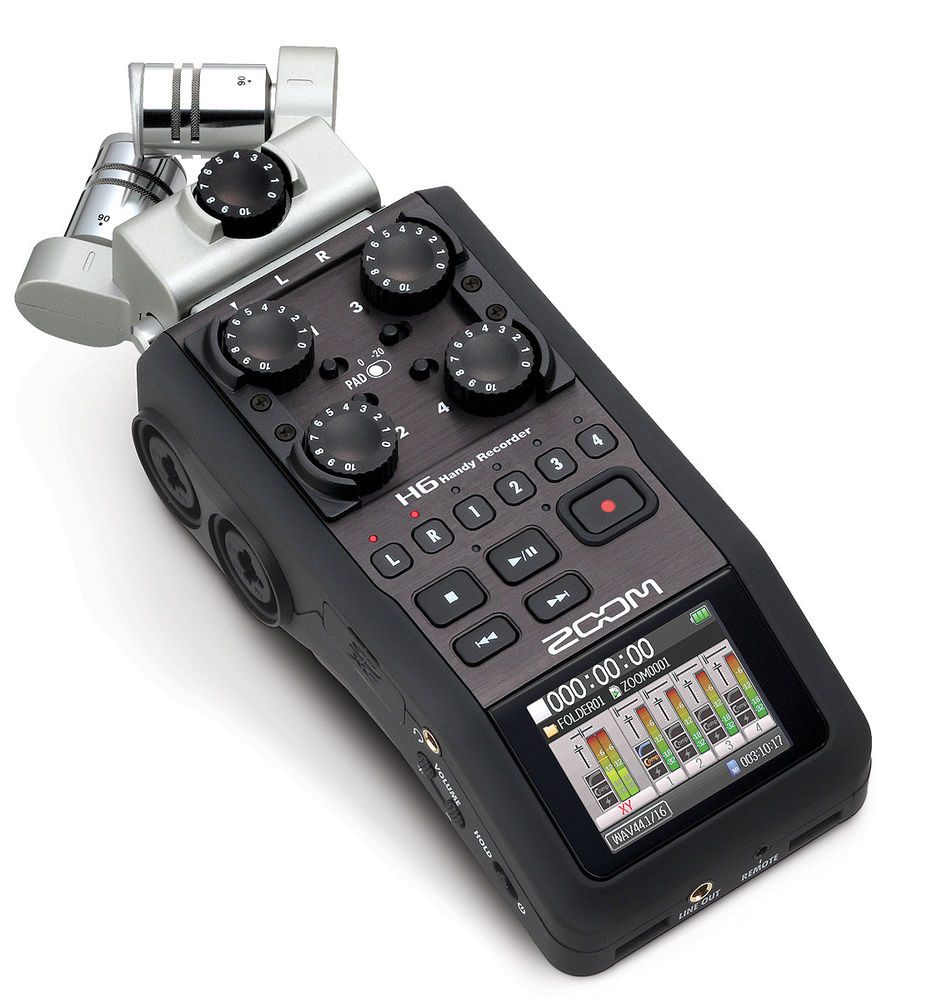
With the prospect of Fiji approaching, I have also read up briefly on the Zoom H6 (again, a SOS review comes through with the goods). With a 4 mic/line inputs, it is capable of recording six channels of 24-bit/96kHz audio. The inclusion of an X-Y and M-S microphone capsules is a bonus, especially considering it is around half the price of the F8. The main differences I can see becoming an issue would be the limitation of microphone inputs (although this is accounting for expandability, and perhaps not necessary to consider at this stage), and the superior pre-amps on the F8 which have been repeatedly commended on their low-noise and large dynamic range. Regardless of the outcome, I hope to obtain a field recorder myself, for use in Fiji, my own ambient recordings, or even as additional equipment useful in contracting my skills out privately.
Rounding out the week, I was back in Neverland tracking The Mailbox Crew's EP: check it out here. I also spent any remaining free time creating a beginner's guide to modular synthesis in the first instalment of my SHARPEN UP blog series; check it out here.
Stay Tuned
- TA


Comments